Tips on how to create a simplified product proposal
Once you have identified which requests you want to prioritize, it’s time to go deeper into understanding the request. Whether it is a new product, new feature, or an enhancement, there is a reason why customers are requesting it, and you need to convey the why to your team. The best way to start the conversation is to create a one-page proposal that briefly highlights the key points of the feature but provides enough insight to begin the design process. These proposals can vary based on organization size and culture but some of the details of what should be included are fundamental across the board. Many companies refer to these as a one pager but it’s perfectly fine if it extends in to two. The intent of the “one pager” is to make sure you keep it brief yet provide enough details to take the request further.
To better drive home the key points of this post, we will use Apple as an example. Apple released a feature called Air Drop back in 2011 and it has revolutionized the way Apple users share files with each other on mobile devices. Let’s walk through how this feature may have come about to the Apple engineering team.
Tell the customer story
As a product manager, no one knows your customer and your market better than you. It should be your goal to understand and think ahead of what your customer needs are now, and in the future. By staying in tune with your customers, instead of mitigating frustrations, you are able to add delighters to your product to keep them engaged and to continue choosing your product or service over competitors. Knowing your customer means knowing how they use your product or service and understanding where improvements can be made based on their pain points and challenges.
When engaging with your engineering team there are few key points you should include when providing insight to the customer.
- Talk about your customer
Let your engineering team in on knowing who the customer is. Is it a business entity, or a end-user? What are their goals? What is a typical day for them and how does your product come into play? This helps to build your team’s connection to the customer by understanding who they are and what your product provides to them on a daily basis. An example of what this may look like for Apple:
Our customers are a diverse group of tech-savvy users that use various digital tools and are willing to use the latest technology to enhance their daily lives. Our customers are constantly creating and collaborating with each other and the convenience of sharing files wirelessly between the other devices will not only enhance their experience but encourage them to choose Apple devices for ease of use and simplicity.
- Identify the pain point
Every feature or enhancement is essentially addressing a problem. Highlighting what that problem is, and where it happens in the flow of your product helps your team. Here’s where using Apple as an example is not exactly ideal. Prior to AirDrop releasing the previous experience was not entirely painful, just inconvenient. Customers may have had challenges with slow transfer speeds, the need to log into specific accounts to share content with others, file attachments may have been too large and compressing content could result in ruining the effect of a design.
Apple example:
The technology industry is moving towards smaller more compact devices. Younger generations are sharing and collaborating at a faster rate than before. These customers frequently share photos, videos, documents and digital content with their friends and family. To keep up with this demand, we need to change the way we approach collaboration today. Younger generations are not as attached to traditional methods of file sharing like USBs or email attachments. This means that collaborating becomes more difficult to do if they need a desktop device to share information. This inhibits collaboration and creativity among teams, friends, and families.
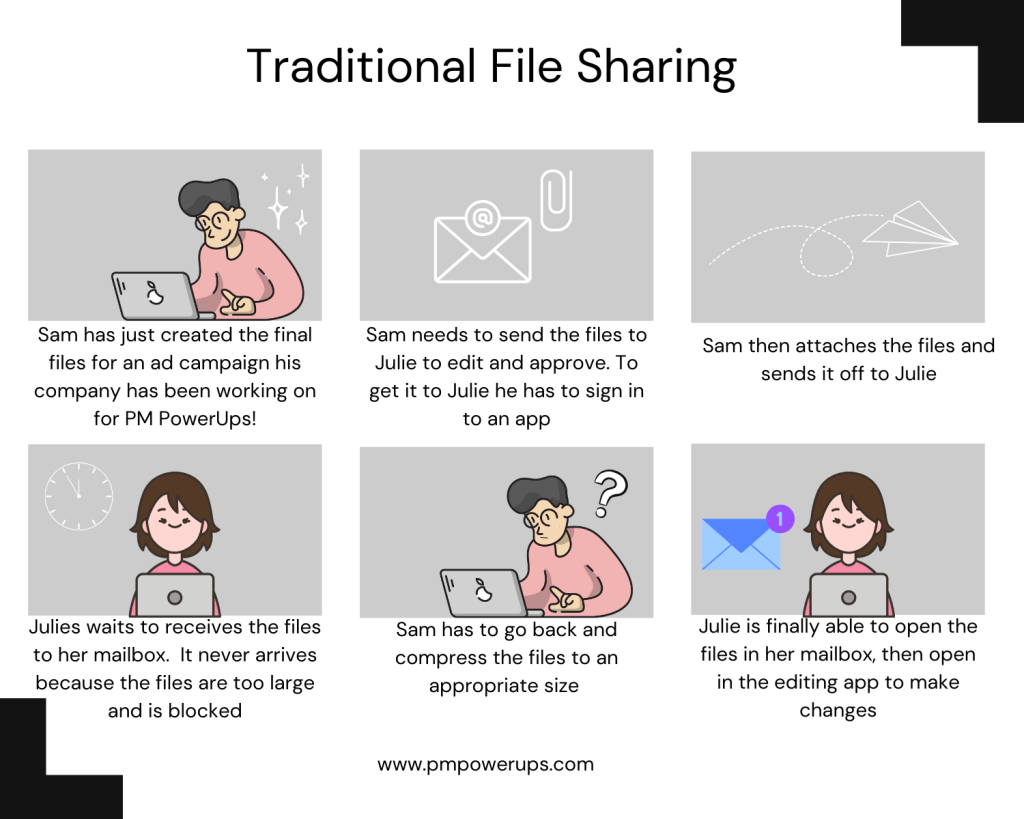
Simplified view of the challenge of traditional file sharing
- Share customer feedback
Depending on the size of the product market, it may be simple to get your team in touch with customers Sharing customer feedback is vital because it keeps the product aligned with customer needs, and ultimately contributes to the long-term success and growth of the product. It’s a fundamental practice that should be integrated into the product development process as it helps maintain focus and provides real-world insights into what customers are experiencing. Sharing feedback, whether that’s through one-on-one calls, surveys, or social channels, sharing actual quotes and data points from customers would be insightful and provide first-hand accounts which add more validity to your ideas.
In our Apple example, Apple has many ways to collect feedback, in every app there is an option to provide feedback. Whether they received direct feedback from users or their product team saw an innovative opportunity to change the technology landscape is unknown.
When customers observe that their feedback is heard through product enhancements and positive changes, they are also more likely to be your product’s advocate and increase customer loyalty. Customers will feel like the product team listens to their input and fosters an environment of transparency and trust.
- Sketch the problem flow
Even though you have provided context of the challenge and customer feedback, it can still be hard to identify where the problems are through simply reading a document. Sketching a flow chart of the problem would help engineering teams visualize the challenge and see where the process can be improved.
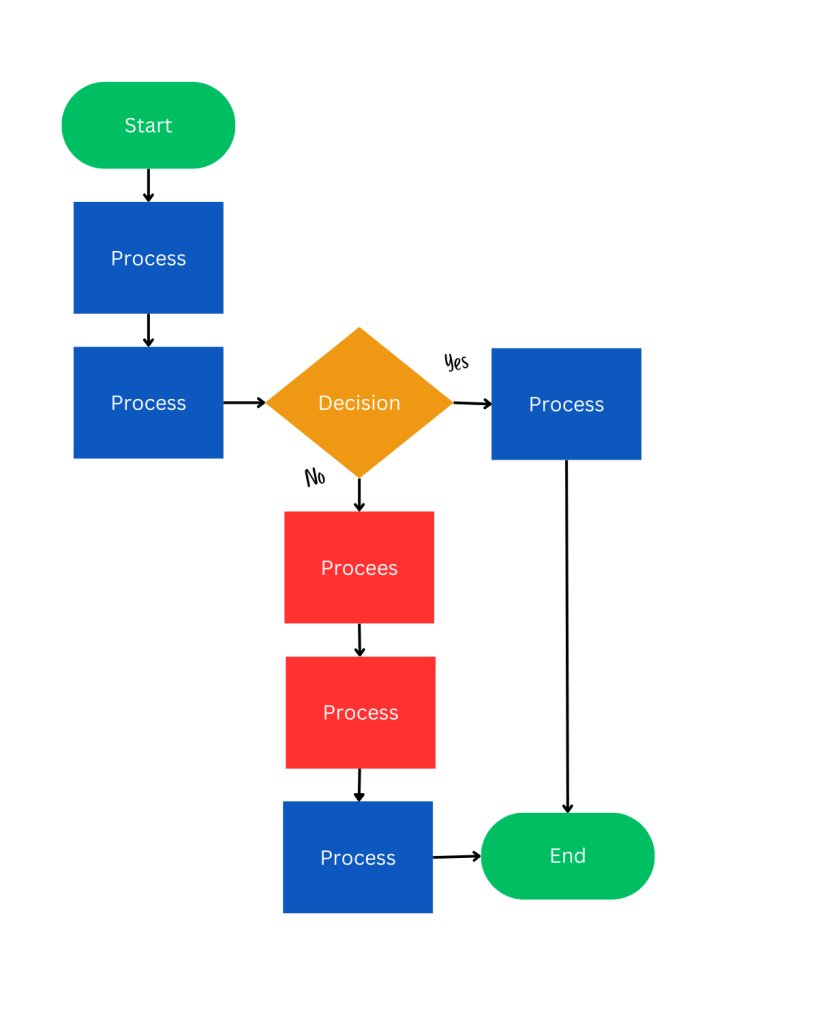
Image of high level flow of what the customer experience flow is like from start to finish
Rough outline of proposal
Once you have provided context on the customer pain point, you should share the intended outcome. When assessing the outcome, there are a few questions that should be answered; What does the future look like for this problem? What is the path that would delight customers and maximize usage? What can we create to keep customers purchasing our product? The solution should address these issues and provide a simplistic method to the existing problem. It may not always be as disruptive as the AirDrop technology, but anything that takes complexity and customer frustration out of the equation is a huge plus.
Here is where you add a little more detail to your proposal. This isn’t a full design spec just yet, but it is a starting point for you to thoroughly convey what the goals and expected outcome of the change should be. Some product managers come from technical backgrounds so it can be hard to resist not providing technical solutions. It’s important that you do not get into technical implementation details here. As the product manager, knowing your role is important. If you have not been technically hands on for a few years, you may be providing inefficient solutions and lead your team down the wrong path. Propose what the end goal should be, and how you want the customers to get there. Let the engineering team decide on the best path forward and you can provide feedback on their proposed solutions.
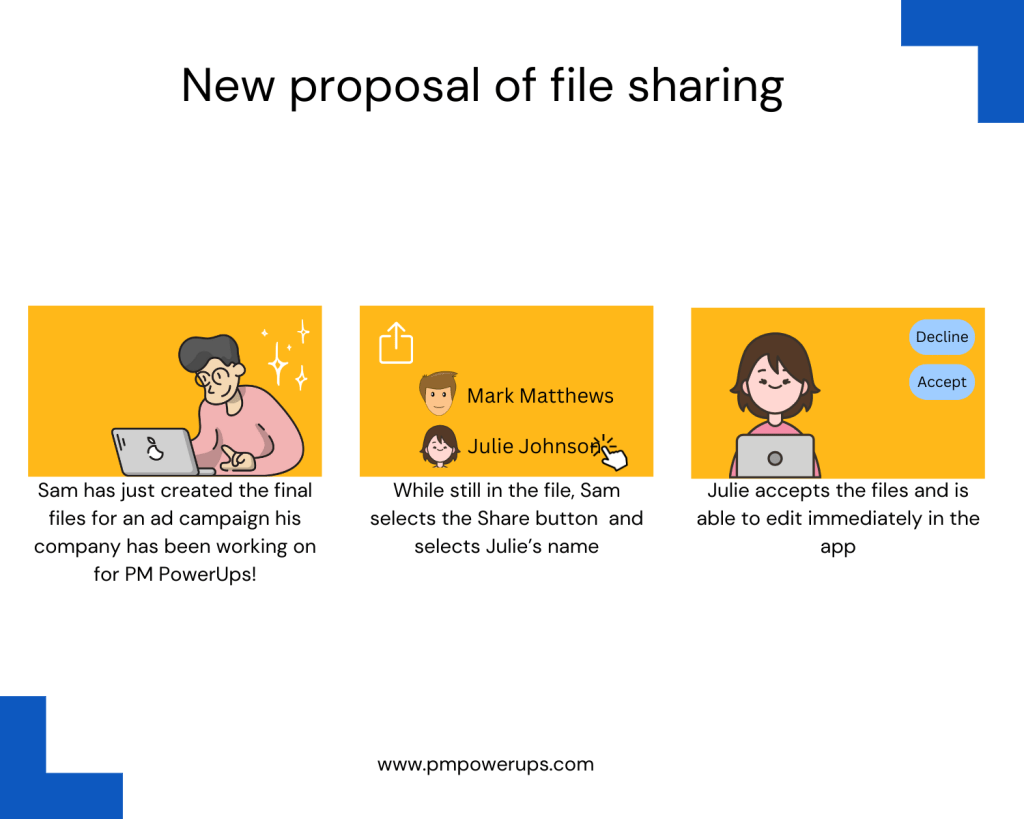
Simplified example of what a proposal may look like by an Apple product manager for AirDrop
The Apple AirDrop solution addresses these inconveniences by providing a simple, direct and secure way to share files between any Apple device without the need for additional apps or services.
Risks
Every product carries a bit of risk, risks are good because it helps you assess whether the product proposal is worth the gamble. Identifying risks early in the planning stage allows you to develop mitigation strategies so you can be proactive and reduce the impact of potential issues. It also helps you to understand your market competitors. It gives you insight into what others have in the market so you can understand how your product would stack up. Most importantly, risk analysis shows that you have thoroughly vetted this proposal and understand where the gaps are. This helps your team and stakeholders develop strong confidence in your proposal since they are aware that you have thought about different challenges that may arise.
Timelines
Unless it is deliverable to a customer with a specific due date, it may be difficult to provide a timeline if you do not fully know the work and cost that is needed. However, you should still set one as timelines provide a sense of structure and accountability. By providing a timeline, you help your team understand and assess how this should be prioritized and compared to other feature proposals. Timelines also create a sense of urgency; by not including one, this signals to your team that this feature is not as urgent as the others or may not have as great an impact as the others. This is still a best estimated guess, but you can include timelines in case you want to target a specific launch, shopping season, or simply to get ahead of a competitor. The idea with this proposal is to provide just enough details to your engineering team to adjust and refine the timeline.
Get feedback
If you belong to an organization with other product managers, get feedback on your documentation. Sometimes product managers can get tunnel vision. Staring at the same challenge can cause you to miss out on some key items. It is always great to get a second opinion on your proposal before presenting it to your team. Your peers can give you diverse perspectives, constructive criticism and even validation on your proposal. Getting feedback early helps you anticipate questions and ensure that you have thought about the scenario thoroughly. If you are confident with your proposal, you may even want to share it with a few customers to get their thoughts. Please note, when sharing early proposals with external entities, your company may require that you have a non-disclosure agreement in place. This can vary from company to company and can depend on the intellectual property details of your product. Feedback is part of professional growth and the more comfortable you are requesting and receiving feedback from others, the faster you’ll adapt, learn, and grow in your role.
A feature proposal is a document that describes why and how a new feature should be built for a product. The article outlines the steps to create a persuasive feature proposal, such as defining the problem, proposing a solution, specifying the user needs, measuring the outcomes, identifying the uncertainties, and estimating the resources and time needed. It also advises seeking feedback from peers to refine and validate the proposal.
Did you find this article valuable? Stay up to date with more product management insights and resources by subscribing to our newsletter.
 PM PowerUps
Leave a comment