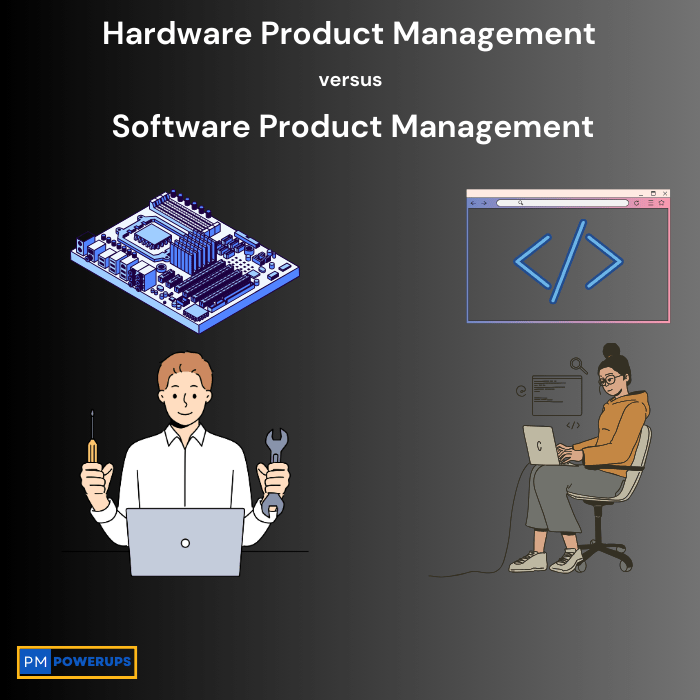
Understanding the Differences Between Managing Hardware and Software Products
Product management is a fairly broad discipline. Even within the same industry and company, a product manager in one group could have entirely different functions and expectations than one in another group. A further delineation of product management lies in the development styles and methods of hardware products compared to software products. With the proliferation of agile methodology, software development has been able to release and iterate faster than ever before. Hardware has improved as well, but due to the nature of the products, the iteration and release cadence are not the same.
If you are considering a transition from hardware to software, or vice versa, there are a few key differences you should be aware of and understand how each sector manages these areas.
- Bug fixes
- Product lead times
- Minimum Viable Products
Bug Fixes
With hardware, the concept of building or enhancing a product after it’s been released is not usually possible. Yes, there are firmware updates that can happen, but beyond that, very little can be done to improve the product. Software, on the other hand, allows for updates if there’s a bug in the initial release. After customers have used it, an update can easily be applied in the next release, not only fixing the bug but also adding more features. If significant bugs in the hardware are impacting the product’s usage, the most extreme option is to do a recall.
Recalls can involve shipping the customer new hardware or having the customer go to designated repair shops to apply changes. Customers can damage hardware, making it more difficult for them to attempt repairs on their own. These recalls are costly and can make or break a product, disrupting the customer experience and incurring manufacturing and shipping costs. In contrast, updating software is much easier; many updates can be done without customer interaction or awareness that an update occurred.
Product lead times
Hardware requires the building of components to create a feature, resulting in longer lead times compared to software. The design and manufacturing of hardware can take months or even years in some cases. Building and shipping thousands or millions of units of devices require a lot of coordination, especially for global products. The logistics, supply chain, and sourcing of parts can all be tedious exercises that require cross-functional teams to coordinate with each other. This level of coordination also adds time to the release process, and any change in the supply chain’s timing can delay shipping the entire product. Shipping software is different. It can be instantly updated without user interaction or easily accessible through the web, making it faster to deploy and release.
Hardware is also less receptive to changes, so it takes more time to finalize what the product will look like upfront. Once the product and requirements have been designed, there is very little flexibility when it comes to modifications, even minor ones. With hardware, it must provide a great experience out of the box, while with software, you have more opportunities to correct bugs and build new capabilities.
Minimum Viable Products
A minimum viable product is the minimum number of features needed to get the product to a customer. Sometimes, the MVP has such limited functionality that it can only be tested with a select few users. However, an MVP can also be a production-ready product actively shipping to paying customers. For hardware products, an MVP may resemble a polished, production-ready feature, while for software products, it may be just enough functionality to attract users. The scope of what’s needed for hardware is usually much broader and more comprehensive than what is needed for software.
Creating an MVP to test with users also looks different for hardware versus software. Let’s look at an example of how software and hardware products differ in release cadence, release times, and capabilities.
Minimum Viable Product for Software Example
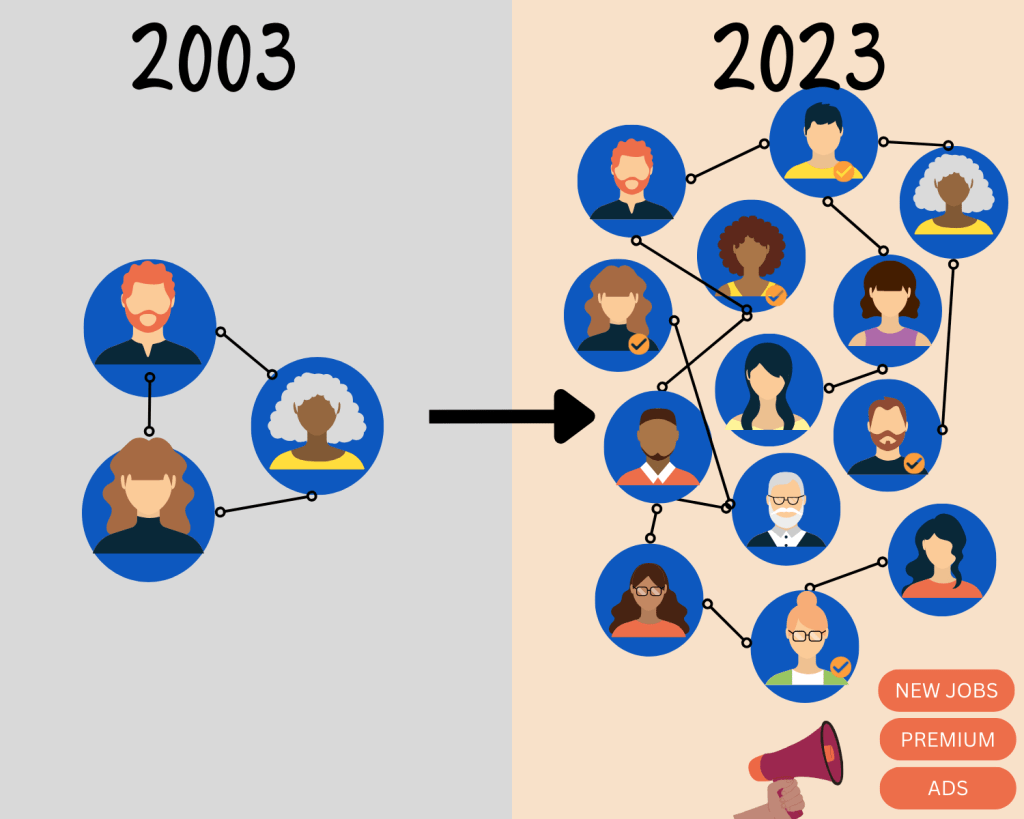
LinkedIn, a widely popular website primarily designed to help professionals connect, has iterated consistently on its functionality. It launched in 2003 as a social network for professionals to engage with each other with just the functionality to connect with others. In one year, LinkedIn grew to 1 million users1. Now that their free product had gained a following, LinkedIn began launching premium features targeting recruiters and premium services. By 2006, there were 10 million users, and the company continued to build out more premium services and social features. LinkedIn was eventually acquired by Microsoft in 2016 with over 400 million users and a multi-billion-dollar business, all starting with a simple interface to connect others with consistent iteration on customer-oriented and premium features.
Minimum Viable Product for Hardware Example
Apple, a company involved in both hardware and software, revolutionized the music industry with the iPod. Although Apple discontinued this product line, it’s a great example of how Apple iterated on the product with different versions and created demand when there wasn’t any initially.
While Apple was not the first company in the MP3 player scene, they revolutionized the music world with the iPod and introduced iTunes, which played a pivotal role in multiple product lines2. The original iPod had buttons, a dial, and a small screen, but it was a minimum viable product for the MP3 player market. After its success, Apple continued to iterate on the product, adding more capabilities and features, making it the MP3 player of choice. But what was the minimum scope needed to launch? A handheld compact device that customers could take anywhere containing a large music library without the need for additional hardware like CDs. There was a time when smartphones were not considered essential and were seen as novelty items. Some argue that the iPod set the path for the iPhone, creating demand through convenience and novelty.

The popularity of agile development allows software teams to build products quickly and iterate more frequently. It provides more room to fail fast and pivot as needed. Because of this flexibility, priorities can shift regularly, leading product managers to feel overwhelmed and burnt out by the constant level of change. For hardware teams, your work may not be immediately realized, and failing at any level during the release process to customers can prove to be a difficult and costly venture.
Challenges You May Face
A product manager with a hardware background transitioning to software management may struggle with some of these differences. Software requires less perfection upfront, and it may be hard to release something that isn’t at least 80% completed and ready for wide-scale production use. Understand and accept that you do have more time, more releases, and the opportunity to change course if requirements change or capabilities don’t work as planned.
A product manager with a software background transitioning to hardware management will face similar challenges. Hardware requires more lead time and planning, meaning you may not see the results of your labor for a while. Hardware is expensive if a product is not as close to production-ready use as possible or if it requires a recall. Flexibility is harder to come by with hardware, as the project release could be years away. It may seem frustrating and slow, but it will save your product and company in the long run.
Regardless of which world you come from, many of the processes of product management remain the same. Customer engagement, prioritization, road mapping, marketing, etc., are all still needed for your product, whether it is a physical device or an application. Understanding some of the differences between the two can better guide your decision on which path is best for you and properly align your expectations.”
Sources:
1 LinkedIn Timeline: Timeline of LinkedIn – Wikipedia
2 Apple Timeline: Timeline of Apple Inc. products – Wikipedia
Did you find this article valuable? Stay up to date with more product management insights and resources by subscribing to our newsletter.
 PM PowerUps
Leave a comment